


Building Independence: How Occupational Therapy Helps You Return to Work and Hobbies
You used to do it without thinking. Typing at your desk for hours. Painting on the weekends. Playing guitar, cooking dinner, picking up your grandchild. Then pain crept in, and suddenly the activities that made you feel like you started slipping away. If you are living with hand, wrist, elbow, or shoulder pain that has stolen your ability to work or enjoy your favorite hobbies, you are not alone, and you are not stuck.
Building independence after an injury or the onset of chronic pain is one of the most important goals in occupational therapy (OT). OT is a specialized branch of rehabilitation that focuses not just on reducing pain, but on restoring your ability to perform the daily tasks that matter most to you. At Hands On Therapy Services in Doral, FL, Certified Hand Therapist Hoang Tran and her team work one-on-one with patients to help them reclaim their active lives, naturally, without pills, injections, or surgery.
Whether you are a working professional dealing with repetitive strain, an active adult recovering from shoulder surgery, or someone who simply wants to get back to gardening without wincing in pain, this article is for you. Let’s explore how OT helps you rebuild independence and return to the work and hobbies you love.
Why Pain and Injury Stop You From Living Actively
Pain has a way of rewriting your daily routine. What starts as a mild ache in your wrist or a nagging stiffness in your shoulder can quickly escalate into something that changes how you move through your entire day. You might start avoiding certain tasks at work. You might stop reaching for things on high shelves. Over time, you may even give up the hobbies that once brought you joy and relaxation.
There are many conditions that can lead to this kind of functional loss:
- Trigger fingers or thumbs that make gripping tools or utensils painful
- Tennis elbow (lateral epicondylitis) or golfer’s elbow (medial epicondylitis) that flare up with repetitive motions at work
- Rotator cuff or labrum tears that limit your ability to lift or reach overhead
- De Quervain’s tendonitis that causes sharp thumb and wrist pain during everyday tasks
- Frozen shoulder that restricts your range of motion to the point where getting dressed feels like a challenge
- Shoulder impingement and tendinitis that worsens with physical activity or desk work
These conditions do not just cause physical pain. They create a cycle of avoidance, frustration, and lost confidence. You start to wonder whether you will ever get back to normal. You question whether your body can handle the activities that once felt effortless. This emotional toll is real, and it is something occupational therapy is uniquely designed to address.
The truth is, most of these conditions respond very well to specialized, hands-on therapy when they are treated properly. The key is finding a therapist who understands not just the anatomy of your injury, but the life you want to return to.
Why Common Solutions Often Fall Short
When pain strikes, most people reach for the quickest fix available. You might rest and hope it goes away on its own. You might take over-the-counter painkillers to get through the workday. Your doctor might recommend a cortisone injection or suggest surgery as the next step. While each of these options has its place, they often fall short of delivering lasting results, especially when it comes to restoring full function and independence.
Rest alone rarely solves the problem. While giving your body a break can reduce acute inflammation, prolonged rest can actually lead to increased stiffness, muscle weakness, and reduced range of motion. If you have frozen shoulder or generalized tightness in your upper body, too much rest may make the problem worse over time.
Pain medication masks symptoms without addressing the cause. Pills may help you push through the day, but they do not heal damaged tendons, restore mobility, or retrain your muscles to function correctly. Once the medication wears off, the pain returns because the underlying issue has not been resolved.
Injections provide temporary relief at best. Cortisone shots can reduce inflammation for a few weeks or months, but many patients find themselves returning for repeated injections without meaningful improvement in their ability to perform daily tasks.
Surgery, while sometimes necessary, is not always the first or best option. Many conditions treated at Hands On Therapy Services, such as cubital tunnel syndrome, CMC arthritis of the thumb, and persistent scar pain after surgery, can improve significantly through skilled therapeutic intervention. Surgery carries its own risks, recovery time, and costs that many patients prefer to avoid when a less invasive path exists.
The missing piece in all of these approaches is functional rehabilitation. That is exactly where occupational therapy steps in.
How Occupational Therapy at Hands On Therapy Services Addresses the Root Cause
Occupational therapy is different from other treatments because it focuses on what matters most to you: your ability to do the things you need and want to do every day. At Hands On Therapy Services, located at 7902 NW 36th St, Suite 207, Doral, FL 33166, this philosophy drives every treatment plan.
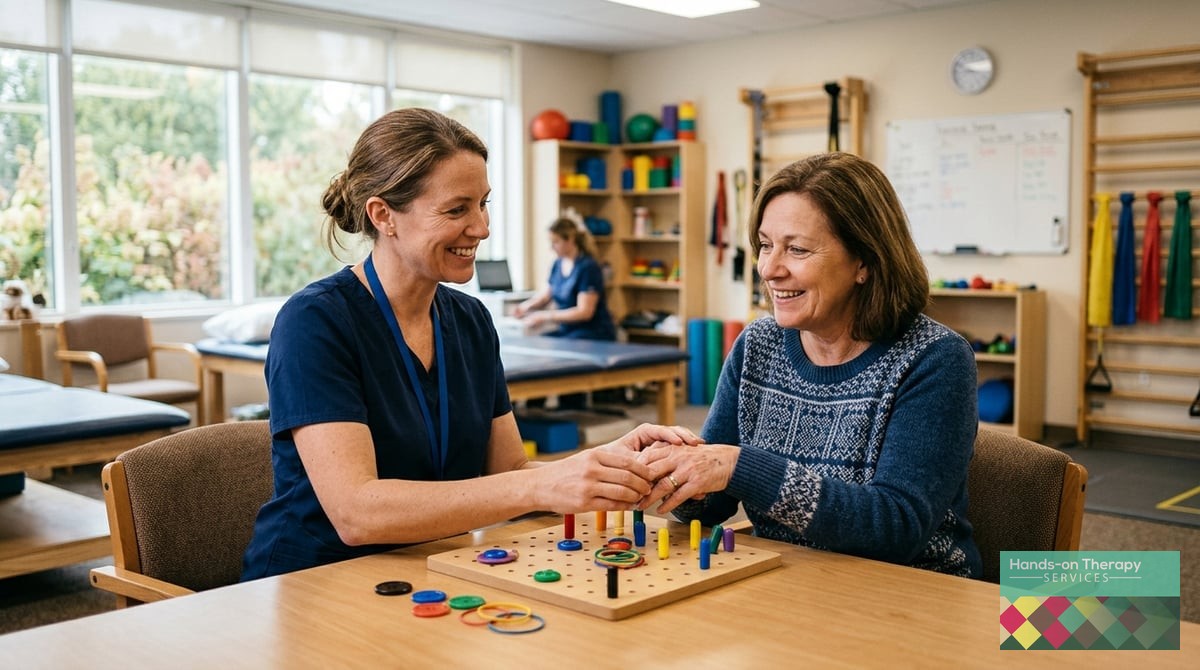
When you visit the clinic, your journey begins with a thorough evaluation. Certified Hand Therapist Hoang Tran and her team do not just look at your diagnosis on paper. They ask about your job, your hobbies, your daily routine, and the specific tasks that have become difficult or impossible. This comprehensive understanding of your life allows them to build a truly personalized therapy program.
Here is how the process works to rebuild your independence:
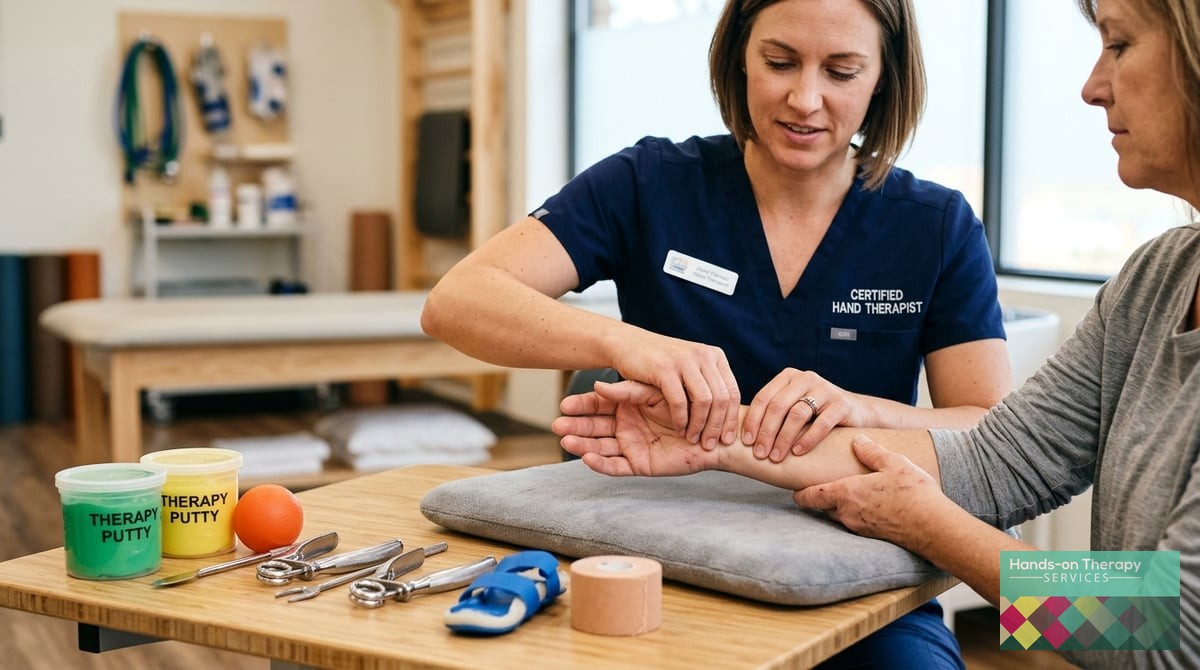
- Hands-on manual therapy: Skilled techniques to reduce pain, break up scar tissue, and improve joint mobility. This is especially important for conditions like frozen shoulder, persistent scar pain after surgery, and thoracic outlet syndrome.
- Targeted strengthening exercises: Progressive exercises designed to restore the specific muscles and movements you need for work and recreation. Whether you need grip strength for your job or shoulder stability for tennis, your program is built around your goals.
- Activity-specific training: Your therapist helps you practice the real-world tasks you want to return to, from typing and lifting to playing instruments and gardening. This bridges the gap between clinical improvement and real-life function.
- Ergonomic education and injury prevention: You learn how to modify your workspace, adjust your body mechanics, and protect your joints so that your recovery lasts long after therapy ends.
- Custom splinting and bracing: When needed, custom orthotics support healing and protect vulnerable joints while you continue working and staying active.
This approach treats the root cause of your limitations, not just the symptoms. It is the kind of occupational & physical therapy that empowers you to take an active role in your own recovery, with a specialist guiding you every step of the way.
5 Practical Tips You Can Try at Home Today to Start Building Independence
While personalized therapy with a certified specialist is the most effective path to recovery, there are gentle steps you can take at home to support your progress. These tips are designed for people dealing with hand, wrist, elbow, or shoulder discomfort who want to start moving in the right direction. Always consult a specialist before beginning any new exercise routine, especially if you are recovering from surgery or injury.
- Gentle fist-making exercises for hand and wrist stiffness: Slowly open your hand as wide as you can, then gently close it into a loose fist. Hold for three to five seconds and release. Repeat ten times on each hand. This simple movement helps maintain flexibility in your fingers and wrist without placing excessive strain on your joints.
- Pendulum swings for shoulder mobility: Stand beside a table and lean forward slightly, letting your affected arm hang down naturally. Gently swing your arm in small circles, first clockwise and then counterclockwise, for about 30 seconds each direction. This is a go-to exercise for people with frozen shoulder or shoulder impingement because it encourages movement without forcing the joint.
- Towel squeeze for grip strength: Roll up a small towel and hold it in one hand. Squeeze gently for five seconds, then release. Repeat eight to ten times. This is a safe way to begin rebuilding grip strength, which is essential for tasks like opening jars, holding tools, and typing.
- Chin tucks for neck tension relief: Sit up straight and gently pull your chin back, as if making a double chin. Hold for five seconds and release. Repeat ten times. This exercise helps relieve neck pain and tightness that can contribute to upper body stiffness and discomfort during desk work.
- Workspace posture check: Take a moment to evaluate how you sit at your desk. Your feet should be flat on the floor, your elbows bent at roughly 90 degrees, and your screen at eye level. Poor ergonomics are one of the most common contributors to repetitive strain injuries. Small adjustments can make a significant difference in how your body feels at the end of the workday.
These tips are a starting point, not a substitute for professional care. If your pain persists or worsens, a specialist can identify the root cause and create a plan tailored to your specific needs.

A Story of Getting Back to What Matters
Consider a scenario that many patients at Hands On Therapy Services can relate to. A 52-year-old office manager, let’s call her Maria, started noticing a deep ache in her right elbow and forearm that spread into her wrist. At first, she brushed it off as the result of a busy week. But over the following months, the pain intensified. Typing became uncomfortable. She could not hold a coffee mug without wincing. And the watercolor painting she loved doing on weekends? She had not picked up a brush in months.
Maria tried rest and anti-inflammatory medication, but the relief was temporary. Her doctor diagnosed her with lateral epicondylitis (tennis elbow) and suggested she consider a cortisone injection. Maria wanted to explore other options first.
When she came to Hands On Therapy Services for a free Discovery Visit, the team took the time to understand not just her diagnosis, but her life. They learned about her work demands, her love of painting, and her goal of returning to full function without relying on medication or invasive procedures.
Over the course of several weeks of one-on-one occupational & physical therapy, Maria’s treatment plan included manual therapy to reduce inflammation, progressive strengthening for her forearm muscles, ergonomic adjustments for her workstation, and activity-specific exercises that mimicked the brush strokes she used in painting. Week by week, Maria noticed improvement. First, she could type through a full workday without pain. Then she could carry groceries again. And finally, she picked up her paintbrush for the first time in months.
Maria’s story is the kind of outcome that Hands On Therapy Services works toward every day. It reflects the clinic’s core belief that recovery is not just about eliminating pain. It is about helping you return to the life that makes you feel whole.
Take the First Step Toward Building Your Independence Again
If pain has been holding you back from the work, hobbies, and daily activities that define your life, know that building independence is possible. You do not have to settle for temporary fixes or resign yourself to living with limitations. With the right guidance, many patients rediscover what it feels like to move freely and confidently again.
At Hands On Therapy Services in Doral, FL, Certified Hand Therapist Hoang Tran and her team are dedicated to helping you return to the life you love through personalized, one-on-one care that treats the root cause of your pain. No pills. No injections. Just expert, hands-on therapy designed around your unique goals.
Ready to start your journey back to independence? Book your free Discovery Visit today and find out how occupational therapy can help you return to work and hobbies without ongoing pain. Call 786-615-9879 or visit handsots.com to schedule your appointment. Your active, independent life is waiting.
Frequently Asked Questions About Occupational Therapy for Returning to Work and Hobbies
What is occupational therapy and how is it different from physical therapy?
Occupational therapy (OT) focuses on helping you perform the specific daily activities that matter most to you, such as working, cooking, writing, or engaging in hobbies. While physical therapy often emphasizes general movement and strength, OT looks at the functional tasks you need to accomplish and builds your treatment around those real-life goals. At Hands On Therapy Services, the team specializes in hand, wrist, elbow, and shoulder rehabilitation with this activity-focused approach.
How long does it typically take to see results from occupational therapy?
Results vary based on your specific condition, severity, and how consistently you follow your therapy program. Many patients begin to notice meaningful improvement within the first few weeks of treatment. Your therapist will set realistic milestones with you and adjust your plan as you progress. Conditions like trigger fingers, tennis elbow, and frozen shoulder often respond well to consistent, specialized therapy over time.
Can occupational therapy really help me avoid surgery?
For many patients, yes. Skilled occupational and hand therapy can significantly improve pain, mobility, and function for conditions that might otherwise lead to surgical intervention. Certified Hand Therapist Hoang Tran and the team at Hands On Therapy Services have helped many patients achieve meaningful recovery without surgery. However, every situation is unique, and the team will always provide honest guidance about the best path for your specific condition.
What should I expect during my first visit to Hands On Therapy Services?
Your first visit includes a comprehensive evaluation where your therapist will assess your condition, discuss your daily activities, understand your work and hobby demands, and identify your goals. The clinic offers a free Discovery Visit so you can learn about your treatment options in a no-pressure, supportive setting. You can schedule yours by calling 786-615-9879.
Does Hands On Therapy Services treat workers’ compensation injuries?
Yes. The clinic regularly works with patients recovering from workplace injuries, including repetitive strain injuries, post-surgical rehabilitation, and conditions such as carpal tunnel syndrome, cubital tunnel syndrome, and tennis elbow. If you have been injured at work and need specialized hand or upper extremity therapy, the team at Hands On Therapy Services can help you navigate your recovery.
This article was created with the help of AI. Images may also be AI-generated.


